Reality Bites: Understanding the Complexity of Failure in Addressing Wicked Problems
Summer Scholars Session II
When the poet Robert Burns wrote, “The best-laid schemes o' mice an' men / Gang aft a-gley,” translated as “The best-laid plans of mice and men often go awry,” he was referring to ways in which well-planned projects executed with the best of intentions usually deliver minimal (at worst) or sub-par (at best) results. In contemporary usage, we have Murphy’s Law, which says, “Anything that can go wrong will go wrong. If there is a possibility of several things going wrong, the one that will cause the most damage will be the one to go wrong.” In other words, Burns and Murphy are speaking to an uncomfortable truth known to most businesspeople, politicians, government officials, social workers, scientists, engineers, and other stakeholders handling complex policy projects in the real world: that “reality bites.” This is even more true when we think of complex problems such as poverty, climate change, migration, public health, violence, and conflict. In the policy world, problems are differentiated into two types: a) Engineering problems that have clearly understood causes, parameters, and well-defined boundaries and usually have feasible solutions, and b) Wicked Problems which have poorly defined and understood causes, parameters, and boundaries, and usually do not have solutions. Poverty, climate change, public health, migration, and violence are examples of wicked problems. We have always tried to solve these as engineering problems, and as the data shows, these problems remain (and have remained) unsolved for hundreds or even thousands of reasons.
As members of human society, we want to protect the poor, the sick, the displaced, and our common home from the ravages of poverty, violence, climate change, illness, and forced displacement. However, as we take on the job of addressing these wicked problems, we have to understand exactly why and how best-laid plans executed with the highest of good intentions fail.
In this course, we will go through multiple well-known case studies of poverty alleviation, public health crises, development projects, refugee movements, and peace efforts in the US and beyond. We will: a) unpack the underlying complexities, b) identify the problems in the approaches used, assumptions made, and resources committed, and c) figure out if anticipation of emerging issues would have led to better results. Above all, in this course, you will come away with an understanding of the complex nature of wicked problems and, hence, a realistic understanding and feasible approaches to providing better aid and comfort to our fellow humans and our common home.
Course Schedule
This course will be offered during Summer Scholars Session II on campus.
Academic Director
Rahul Oka
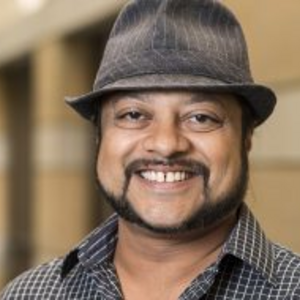
Professor Oka is Research Associate Professor of Anthropology and Global Affairs at the Keough School for Global Affairs and is an economic anthropologist whose research focuses on the anthropology of urbanism, the development of complex socio-economic networks and systems, and the relationship between climate, conflict, inequality, and migration. He focuses on the impact of trade, commerce, and traders on social, political, and cultural infrastructures. These impacts are explored through 1) Archaeological and historical analysis of trade in the Indian Ocean, ca. 1000 BCE – 1800 CE, history, and 2) Ethnographic and network analysis of trade and consumption in unstable political environments such as conflict zones, and refugee camps/displaced peoples’ settlements in Africa, Asia, and Europe. Oka’s current research focuses on trader networks, refugee-host interactions, and poverty and inequality in the disaster and conflict economies of Eastern Africa (Northern Kenya, South Sudan, Ethiopia, Somali, and Uganda), and on understanding current refugee and migrant flows from Asia and Africa into Europe, specifically focusing on the Balkans. He has worked with the United Nations High Commissioner for Refugees, The World Bank, the United States Agency for International Development, the Bureau of Population, Refugees, and Migration of the US State Department, and the Commissariat for Refugees and Migration for the Serbian Government on various relief projects.
Recent research: Fighting for Displaced People