Research Computing: Computers Accelerating Discovery Summer Scholars Session I
Climate change, infectious diseases, and shrinking energy resources are just a few of the pressing challenges facing the global community. To tackle these issues, talented young people from diverse fields such as science, engineering, the humanities, business, and technology—including AI, machine learning, and tech ethics—must collaborate using various methodologies and tools. One of the most powerful tools at our disposal is research computing. Students who join the Research Computing track this summer will experience firsthand the incredible potential of computing tools to address the world’s most complex problems.
To understand research computing, students will be introduced to High Performance Computing (HPC) and will have the chance to build and operate their own “supercomputers,” albeit on a smaller scale. Working in teams, they will run simulations modeling hurricanes, molecular proteins, viral pandemics, social networks, and the implications of AI and machine learning. Students will also explore 3D visualizations, computer animation, visual effects, and mobile device applications, making the course relevant to the ways computing impacts our daily lives. A guided field trip to a data center and the U.S. Department of Energy (DOE) National Lab will further enhance the experience, showcasing how innovations in research computing are applied on a national scale.
While students with a background in computing are encouraged to apply, prior experience is not required. Participants in Research Computing will be continuously encouraged to explore how research computing—and its intersection with AI, machine learning, and tech ethics—can be applied in their areas of interest. Whether you aspire to be a doctor, lawyer, engineer, scientist, entrepreneur, or philosopher, this course will equip you with the knowledge to effectively integrate computer research into your chosen career path.
Course Schedule
This course will be offered during Summer Scholars Session I on campus.
Academic Directors
Paul R. Brenner
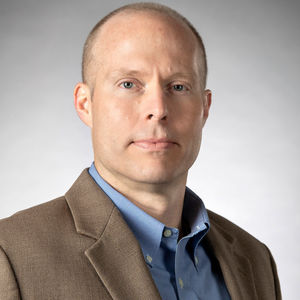
Paul R. Brenner, Ph.D., P.E., is an associate director of Notre Dame’s Center for Research Computing in charge of HPC Operations and User Support. His research efforts include energy-efficient computing and novel distributed algorithms for Monte Carlo simulations. In addition to the instruction of multiple science and engineering courses, for the past seven years Prof. Brenner has instructed the Student Engineer’s Reaching Out team as part of his engineering service-learning course.
Prof. Brenner has multiple public outreach and educational activities including a recent data center and public greenhouse integration project cited in multiple news venues including the Chronicle of Higher Education and The Economist.
Scott Hampton
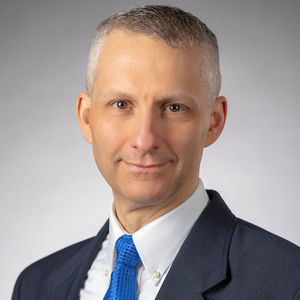
Scott Hampton, Ph.D., manages User Support Services at Notre Dame’s Center for Research Computing. He previously spent three years at Oak Ridge National Lab as a postdoctoral researcher where he worked on speeding up molecular dynamics simulations through the use of GPUs and high performance computing. Prior to joining Notre Dame, Dr. Hampton was an associate professor of computer science at Walsh University, where he focused on courses related to scientific and parallel computing. His research interests are varied within the field of computer science, with an emphasis on issues related to exascale parallel program performance and HPC education.